Report by Lezlie Jenkinson, South Africa
The aim of my visit to Tanzania was to establish and strengthen relationships with organisations that could help set up, facilitate and supervise LEAP programmes, with a view to expanding their reach and supporting the future distribution of PC Resonances.The visit also provided an opportunity to deliver training, build local capacity, strengthen existing partnerships and identify new opportunities to bring LEAP and PC Resonances to communities, schools and organisations across East Africa.
Amazing Grace Widows and Orphanage Tanzania (AGWOT)
I had the pleasure of meeting Winny from Amazing Grace Widows and Orphanage Tanzania (AGWOT) in Arusha. We had been in contact previously, and it was wonderful to meet in person.
Winny runs an orphanage and a safe house for abused teenage brides and orphans. Having personally experienced the loss of her home and land following the death of her husband, she is now dedicated to supporting groups of Maasai widows in their fight for the right to own and retain their land and livestock.
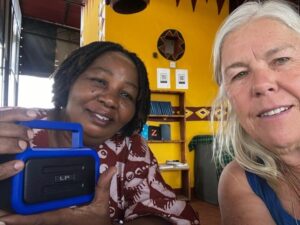
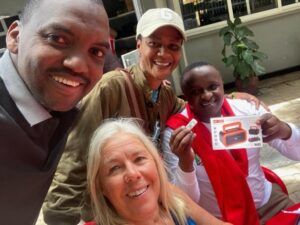
L: Lezlie with Winny from AGWOT – R: Lemmy, Idd and Ruth, leaders of support groups, receiving LEAP
Winny is a strong supporter of the work of ARHF and is committed to bringing its programmes to the communities she serves. I have arranged for her to oversee and circulate the LEAP programme among her widows’ groups, orphanages and schools in the Monduli District.
This partnership offers an excellent opportunity to reach vulnerable women and children and to establish a sustainable local network for delivering LEAP.
Mimutie Women Organisation
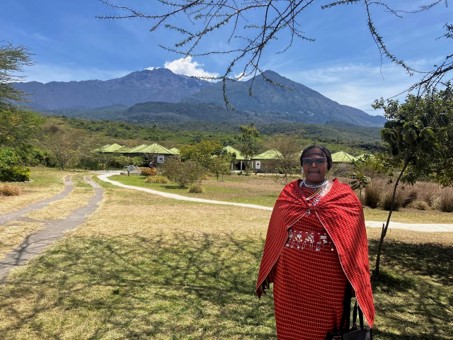
I am also working with Rose from Mimutie Women Organisation in the Ngorongoro District of northern Tanzania. Rose is another remarkable Maasai woman who campaigns to raise awareness and educate tribal elders and local communities about the dangers of female genital mutilation (FGM), teenage pregnancy and gender-based violence.
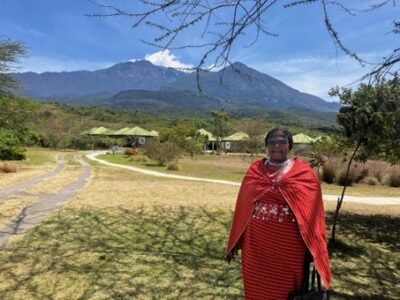
Rose from Mimutie Women Organisation and the majestic Kilimanjaro
Rose plans to incorporate LEAP into all her conferences, extending its reach through her existing community networks and educational activities.
We also discussed the possibility of future visits to her homeland to support the distribution of PC Resonances. This could provide an opportunity to build on our current collaboration and reach more remote communities.
Africa Amini Alama
One of the highlights of my visit was the opportunity to visit the clinic of Dr Cornelia Wallner-Frisee in Maasai land, near Mount Kilimanjaro, where PC Resonances are distributed.
Africa Amini Alama is an extraordinary project founded by Cornelia’s mother, Christine Wallner. It was, without doubt, one of the most impressive centres I have ever visited. More information about its work can be found at https://AfricaAminiAlama.com/
Dr Cornelia asked me to introduce LEAP to the schools associated with the centre. I was delighted to support this initiative.
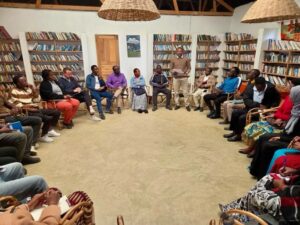
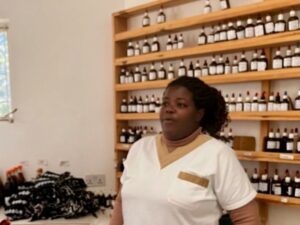
(L) Vegetable garden at LEAP school (R) Raban Amakali, Educ. Officer in Tsumkwe
The LEAP programme is currently being piloted in three of the organisation’s primary schools, with encouraging initial feedback from teachers. Below is the report prepared by the Lead Head Teacher, Moses Julius Kaaya.
Report on the Implementation of the LEAP Programme in Africa Amini Alama Schools
Date: 23 September 2026
Prepared by: Moses Julius Kaaya
1. Introduction
Africa Amini Alama operates seven primary schools and four secondary schools. The LEAP programme is currently being implemented on a pilot basis in three primary schools, with plans to introduce it to additional schools in the near future.
2. Schools Under Africa Amini Alama
Primary schools (7):
- Worseg Vision English Medium Academy
- Simba Vision Primary School
- Masai Vision Primary School
- Nuru Vision Primary School
- Lendoiya Primary School
- Mukuru Primary School
- Oltepes Primary School
Secondary schools (4):
- Africa Amini Secondary School for Sustainable Tourism
- Oltepes Secondary School for Regenerative Agriculture
- Pamoja Secondary School
- Mukuru Secondary School
3. Schools Currently Participating in the LEAP Pilot
3.1 Worseg Vision English Medium Academy
- Total teachers: 18
- Total students: approximately 346
- Teachers currently using LEAP: Moses Julius Kaaya, Emanuel Lazaro Sabore, Miriam Rafael, Madam Aziza, Martha Lucas Nassari, Lilian Laizer and Yusta Ndembeye.
3.2 Nuru Vision Primary School
Nuru Vision is a newly established school offering pre-primary education, Class One and Class Two.
- Total teachers: 5
- Total students: 157
- Teachers currently using LEAP: Wariambora Nasari and Sarafina Zakaria.
3.3 Lendoiya Primary School
- Total teachers: 13
- Total students: 248
- Teachers currently using LEAP: Elibariki Thomas Mado, Happy Ayrami and Swalehe Kitia.
4. Observed Changes and Benefits
According to feedback from teachers, the LEAP programme has brought positive changes to the classroom environment. Since its introduction, teachers have observed:
- Improved classroom discipline and a calmer atmosphere.
- Better listening skills and concentration during lessons.
- Increased creativity and participation.
- Greater interest in learning and school subjects.
These initial observations suggest that LEAP is contributing positively to students’ classroom engagement and learning experiences.
5. Support and Future Plans
Dr Cornelia, Director of Africa Amini Alama, has instructed the manager to ensure that each participating school receives one speaker and one USB stick as an initial step in supporting the programme.
If the pilot demonstrates positive results and receives favourable feedback, Dr Cornelia has committed to providing additional speakers to support the programme’s expansion.
The remaining schools are expected to join in the near future, depending on the progress and experience gained during the pilot phase.
6. Conclusion
The implementation of LEAP in the three pilot schools is progressing positively. Teachers are beginning to integrate the programme into their teaching, and initial feedback indicates encouraging improvements in students’ concentration, creativity and interest in learning.
Continued support through the provision of equipment, teacher engagement and regular monitoring will be important in strengthening the programme and supporting its expansion to other Africa Amini Alama schools.
Women Action for Development and Solidarity (WADS)
From Tanzania, I travelled via Dar es Salaam to Kigoma to meet the team at Women Action for Development and Solidarity (WADS). Until this visit, our contact had been limited to online meetings and an initial basic training session.
The purpose of the visit was to build on that foundation by reviewing the preparation of master bottles and bottles for individual patients, using Harry’s excellent manual as a practical training resource. I also wanted to equip the WADS team to deliver the LEAP programme alongside their work with PC Resonances.
I was delighted by the team’s enthusiasm and commitment, particularly that of Subira and Jacob. They are quick learners, highly motivated and eager to share their knowledge and extend the reach of both LEAP and PC Resonances.
I have now supplied the team with an extensive range of PC Resonances, giving them the resources to begin supporting their work in the community.
The visit was an important step in strengthening WADS’ capacity and building a foundation for continued collaboration and local delivery of the programmes.
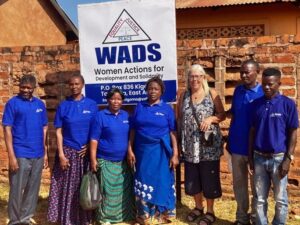
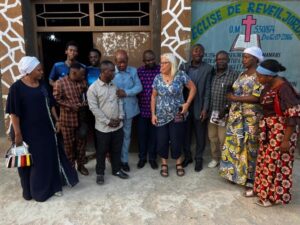
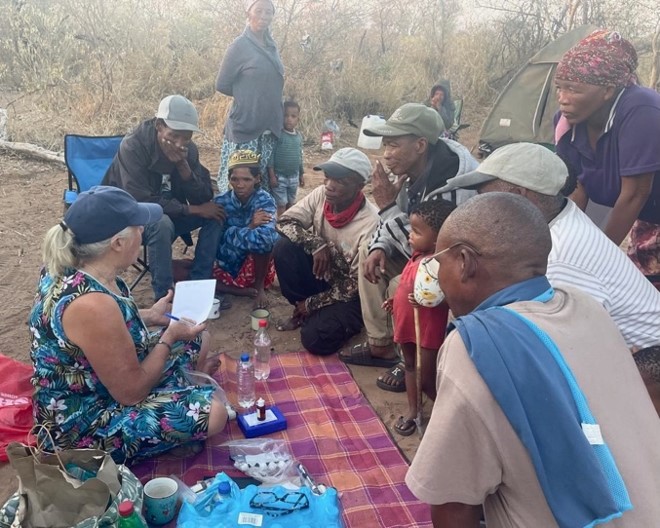
L: The amazing team of WADS in Kigoma R: Training in Bujumbura (Burundi)
Bujumbura, Burundi
From Kigoma, I travelled north by bus to Bujumbura, the capital of Burundi, to meet Paul Mamba, whom I had previously met in Bagamoyo, Tanzania. Paul has since relocated to Burundi and is developing his work there.
The purpose of the visit was to train a team of ten new distributors in PC Resonances and the LEAP programme. We were also joined by Dr Kabamba from Uvira in the Democratic Republic of the Congo (DRC).
The training was well received, and all participants were enthusiastic and ready to begin distributing PC Resonances and introducing the LEAP programme within their respective communities.
This meeting represents a further step towards expanding the network of trained distributors and programme facilitators beyond Tanzania and into neighbouring countries.
Conclusion and Next Steps
The visit to Arusha, together with the subsequent visits to Kigoma and Bujumbura, was a valuable opportunity to establish new partnerships, strengthen existing relationships and develop local capacity for the delivery of LEAP and the distribution of PC Resonances.
Several important outcomes emerged from the visit:
- Community outreach: AGWOT and Mimutie Women Organisation provide promising routes for reaching Maasai widows, vulnerable women, children and rural communities.
- School engagement: Africa Amini Alama has begun piloting LEAP in three primary schools, with encouraging initial feedback and plans for potential expansion.
- Local capacity building: The WADS team has received further practical training and resources to support its work with PC Resonances and LEAP.
- Regional expansion: Training ten new distributors in Burundi, with participation from the DRC, has helped extend the network of people equipped to introduce these programmes in their countries.
A key priority now is to support these partners as they put their training into practice. This will involve maintaining communication, monitoring progress, addressing practical needs, gathering feedback and identifying opportunities to expand the programmes sustainably.
I returned from the visit encouraged by the commitment, energy and dedication of the people I met. There is considerable potential to develop these partnerships further and to extend the reach of LEAP and PC Resonances through locally led initiatives across the region.

Stories of Hope & Impact