Research on HIV/AIDS
“The grass is greener where you water it.”
— Neil Barringham
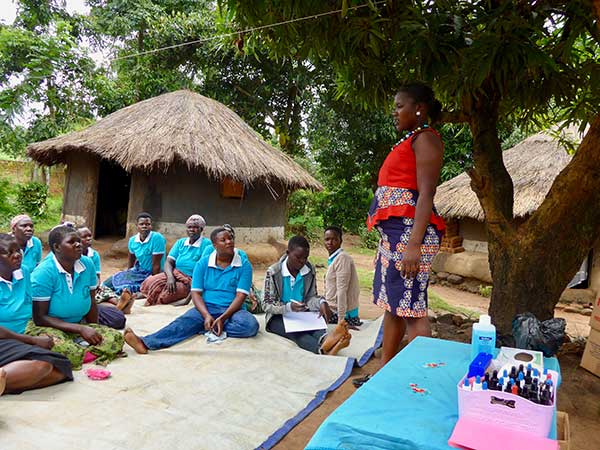
Doctors and nurses working in the field with ARHF often report positive observations among patients using PC Resonances, and these firsthand experiences motivate their continued interest in these natural, information-based remedies. To responsibly expand access and support wider acceptance, ARHF places strong focus on collecting data and supporting rigorous research (both anecdotal and clinical), despite the challenge of limited research infrastructure in rural areas where many of our teams work.
Since PC1 for HIV/AIDS was first introduced in 2002, positive clinical outcomes have been reported across multiple countries, including Ethiopia, Malawi, Nigeria, Kenya, and Uganda. [1-5]
Resonance Impact as a Study
Kenya Comparative Study (2017–2018)
Over six months, all groups showed improvements—but the PC1-only group had the most significant gains in appetite, weight, energy, CD4 counts, and reduced viral load. The combined ARVs + PC1 group showed the second-best results, while the ARV-only group showed the least progress. Bellow are detailed results in percents.
CD4 Increase
CD4 cells are a type of white blood cell that helps protect the body from infections. HIV attacks these cells, so a higher CD4 count means a stronger immune system. Tracking CD4 levels helps monitor how well treatments are working.
Viral Load Decrease
Viral load refers to the amount of HIV in a person’s blood. A lower viral load points to better control of the virus, reducing symptoms and the risk of transmission. Effective treatments aim to decrease viral load to undetectable levels.

- Chappell PL. The Second Simillimum. Homeolinks Publishers, Haren (Netherlands) 2005
- Chappell PL, van der Zee HE. Homeopathy for Diseases. Homeolinks Publishers, Haren (NL) 2012
- Hiwat C, van der Zee HE. PC1 – Answer to AIDS in Africa, Homoeopathic Links, 2004; 17(4):264-269
- van der Zee HE. Homeopathy for HIV/AIDS – A Genus Epidemicus Approach, HomeoBuzz, Jain Publishers, New Delhi 2008
- Schustereder K. PC 1 als homöopathische Arznei bei AIDS – Erfahrungen aus der staatlichen Klinik Baboua in Zentralafrika. AHZ 2007; 252(3):109-118
- van der Zee HE, Walach H. Novel Immune Supportive Treatment of HIV/AIDS – Comparative outcomes study in rural clinics in Africa. IJHC 2024, 24(1) 18-34