Malaria research
“Be the change you want to see in the world.”
— Mahatma Gandhi
Malaria remains a leading cause of illness and death in sub-Saharan Africa, disproportionately affecting children under five years of age. Despite existing treatments and preventive measures, the disease continues to pose significant health challenges.
Innovative Approach: PC240m
PC240m is a resonance-based medicine developed to treat and prevent malaria and has been in use since 2002. Early observations in Malawi indicated that patients treated with PC240m remained free of malaria attacks for six months or longer. This finding suggested potential for both treatment and prevention.
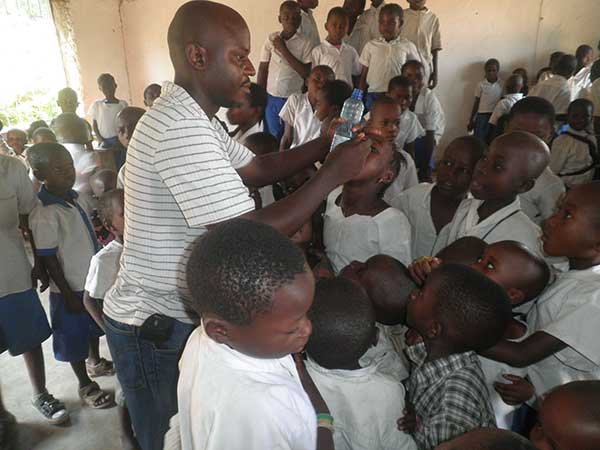
Malaria continues to claim lives in sub-Saharan Africa, particularly among young children. ARHF’s fieldwork demonstrates that PC240m—a natural, resonance-based medicine—can help reduce infections, hospitalizations, and deaths when used preventatively in communities. Initial data from regions where the medicine has been distributed show a remarkable reduction in malaria cases and deaths, indicating strong potential for broader application.
Malaria continues to claim lives in sub-Saharan Africa, particularly among young children. ARHF’s fieldwork demonstrates that PC240m—a natural, resonance-based medicine—can help reduce infections, hospitalizations, and deaths when used preventatively in communities. Initial data from regions where the medicine has been distributed show a remarkable reduction in malaria cases and deaths, indicating strong potential for broader application.
The implementation of PC240m in various regions has yielded promising results.
What we see in practice and what it means for the community
Africa Malaria Prevention Project (AMPP)
Building on these results, ARHF launched the Africa Malaria Prevention Project (AMPP) in 2013, with the goal of providing accessible and safe malaria prevention. After offering AMPP to 27,000 people in Malawi, schools reported reduced absenteeism, while local hospitals saw a reduction in hospitalizations and deaths from malaria. [1]
Epidemiological Study in Bukavu, DR Congo (2018-2023)
A non-randomized outcome study was conducted in Kadutu Commune, comprising 13 Health Areas (HAs). The results are as follows:
Malaria cases per 1000 (all ages)
Malaria deaths per 1000 (all ages)

References
- Van der Zee HE (2016). Africa Malaria Prevention Project. Homoeopathic Links 2016;29(2):137–146.
- Van der Zee HE, Alimasi DB, Balikwisha JN, Walach H (2025). Novel Immune Supportive Prevention of Malaria, Data Collection Research in the city of Bukavu (DR Congo). International Journal of Malaria and Tropical Diseases (IJMTD) Vol. 6(1):113-121