Report by Gunhild Quante, ARHF Heart Team
Together with Brigitte Pereira from Portugal, Marianne Sommer-Graes, and Marcus Porsche (both from Germany), I (Gunhild) spent 16 days in Uganda visiting our volunteers and witnessing their work for the ARHF. This trip wasn’t just for tourism, but also to inform our guests, as well as to support and supervise our volunteers.

We travelled with Boaz, our capable Ugandan coordinator, from Kampala in the east of the country westward to Kabale, near the border with Rwanda. Traveling by public transport, we quickly learned that infrastructure in Uganda is quite different from that in Europe. The journeys were often arduous, yet deeply fascinating. Being close to the open-minded locals—riding in crowded buses, waiting for hours to secure a seat, and enduring bumpy roads without shock absorbers—gave us an authentic and vivid picture of Uganda. We shared many laughs, and the Ugandans were genuinely happy to include us in their daily lives and conversations.
Marianne: “We increasingly took the long journeys in overcrowded cars over extremely bumpy roads and overbooked buses with more humour. I think that was also due to our great group. Even the hotels and accommodations, which didn’t necessarily meet our German standards, seemed quite comfortable in the end.”
On our very first day, we drove six hours from Kampala to Namayingo, 150 km east, to visit our volunteer Ephraim, who works with an organization that develops vocational skills for young people.
Ephraim and his small team organized an outreach event in a modest mud church. We treated around 60 patients, many suffering from malaria, AIDS, stomach issues, and high blood pressure resulting from trauma. We also administered our malaria prophylaxis PC 240m to 30 children. My guests were a great help, labelling medicine bottles and distributing the medication.
Brigitte: “Uganda has a rich mosaic of tribes—over 56 ethnic groups are officially recognized. Each tribe has its own language, and some of these languages are mutually intelligible. Swahili is an official language alongside English; however, in rural areas, patients often have limited knowledge of English, especially among older adults. This posed a language barrier for me, making it difficult to fully understand the patients and their illnesses. Families often accompanied the patients. The people were generally warm, friendly, grateful, and deeply respectful, and with gestures and the help of a local translator, we did our best to administer the prescribed treatment.
Common cases I encountered included malaria, respiratory infections, diarrhea, typhoid, wounds, parasitic infections, syphilis (syphilitic rash), and HIV.”

In Namayingo, we visited two more schools to introduce the LEAP program. The positive results of the program are spreading, and the schools were eager to participate.
Bernard, a local traditional African herbalist who also uses our PC remedies, kindly offered his practice in the outskirts of Kampala so that Boaz could conduct a volunteer training course on malaria and HIV/AIDS treatment. About 15 volunteers attended. There we met Rosette, a smart, successful woman who helps other women start small businesses, such as selling homemade food.
Boaz plans to stay in touch with her to collaborate on social security or sustainability projects. This, too, is an important part of our work—helping people create their own livelihoods.
Continuing westward, we passed through Bukomasimbe, where we treated over 50 people with Pastor Robert Kintu during an outreach event. We administered malaria prophylaxis for the children and visited LEAP schools. Our journey then led us to Bugala, an island in Lake Victoria, where we conducted a large five-hour outreach. The grateful residents thanked us with a delicious fish dinner.

In Kabale, our next destination, we visited Boaz’s family and three orphans living with his parents, who have been supported by Marcus and Marianne for some time.
Marcus: “I met the three orphans I have been supporting for a few years. That’s something completely different than receiving a letter or a photo. The trauma of loss is slowly dissolving, and they are increasingly living life to the fullest.”
It had been seven years since my last visit. Boaz now has three children, and his parents have grown older—just like me. The warm welcome from the family after such a long time was a deeply touching moment for all of us.
In Kabale, we also met a five-member delegation from the local Lions Club, who shared valuable advice to help facilitate Boaz’s work on site. There is still much to be done!
At the “Sacred Nursery and Primary School” in Kabale, the headmaster spoke enthusiastically about the consistently remarkable results of the LEAP program.

The same applies to a school in the Rwenzori National Park—remote, hidden in the rainforest, and very poor.
A particularly dedicated group of teachers from three schools in Kisoro reported with enthusiasm on LEAP’s impact: significantly reduced absenteeism due to lower malaria rates, improved academic performance, and greatly enhanced social behaviour among students.
Even the teachers themselves benefit enormously from this program.

All in all, it was a deeply enriching journey—for my guests and for me as a representative of the ARHF. I was once again reminded of the immense value of our work in this very poor country: how the LEAP program successfully prevents malaria and other infectious diseases, improves children’s performance and social skills through trauma treatment, and ultimately gives them a real chance at a good education and a better future.
We were a wonderful team—cheerful, communicative, and calm, as one must be in Africa. And, of course, we are grateful to have returned home safe and sound!
Brigitte: “During this voyage in this colourful, lively Uganda with plenty of natural wealth and human warmth, I learnt that it is important to have empathy, listen and to have creativity, so that I could engage meaningfully with these communities, and also be able to see those eyes shining with hope.”
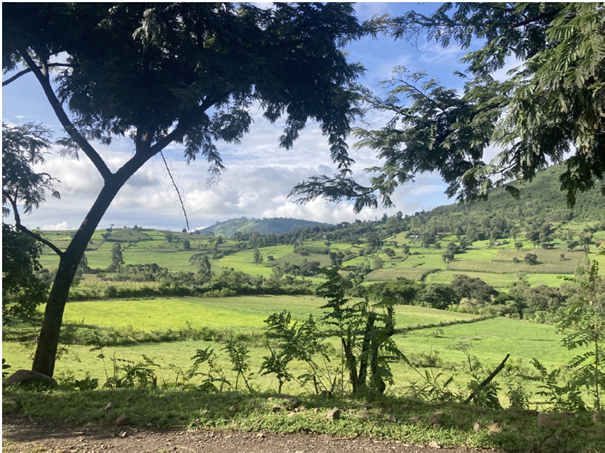
Marianne: “A big thank you to Gunhild, who took us on her ‘adventure trip’ where we were able to experience the diverse African people, the extraordinary animals for us, the beautiful landscape of Uganda, and the masterful ARHF program ‘up close’.”
Marcus: “After 14 days since my return, I would say: Despite the garbage, the squalid conditions, the mosquitoes and parasites, and because of the simplicity and poverty, the encounters with the people, especially the children, in conversation, even more so in singing and dancing, are so touching and moving that they have changed me. They have opened my heart.”


Stories of Hope & Impact